A Harbour That Keeps Its Own Hours
Stone underfoot still holds the day's heat when the first lamps come on along the quay. The water below has already changed its mind about colour — from the hard blue of afternoon to something slower, closer to pewter — and the lines on the boats hang with a slack that means the tide has finished arguing for a while. This is not a marina arranged for evening photographs. It is a harbour that still answers the water before it answers the clock on anyone's wrist.
Fishermen's sheds keep their doors half open. A coil of rope waits where it was left at noon. The smell is salt, diesel faintly cooled, and the mineral damp of granite that has been wet twice a day for longer than the town has written its own history. Voices travel differently here once the light softens: shorter exchanges, no need to raise them against engines that have already gone quiet. Someone rinses a bucket at the edge. Someone else checks a fender and walks on without looking at the hillside hotels that will fill later.
What distinguishes a working quay from a promenade is the order of priorities. Tide comes first. Then wind. Then the state of the slip where the morning boats will leave again before most visitors have ordered coffee. The calendar of festivals and season openings sits further down the list, useful for the restaurants and useless for the people who know which hour the harbour will actually be empty enough to hear. Those who berth here regularly treat dusk as a second morning — a chance to arrive when the show has finished and the place has returned to itself.
A berth chosen for that hour looks ordinary in daylight. It faces away from the brightest stretch of frontage. The walk from gangway to door does not cross a terrace mid-service. The hull sits where the water is still a working surface rather than a mirror held up for the town. In that sense it shares a discipline with a quiet berth after the marina has finished performing: the approach is planned for when the quay has stopped performing, and hospitality is measured in what is left undone rather than what is announced.
From the stone, the harbour reads as depth and sound. Water against timber. A rope that creaks once and settles. The faint knock of a boom that someone forgot to secure until the breeze reminded them. Inland, the streets begin to take on the evening's commerce — doors open, menus lit — but the quay remains a few minutes behind that programme, as if the tide had set its own zone of delay. That delay is the reason to be here. It cannot be ordered. It arrives only when place and timing agree.
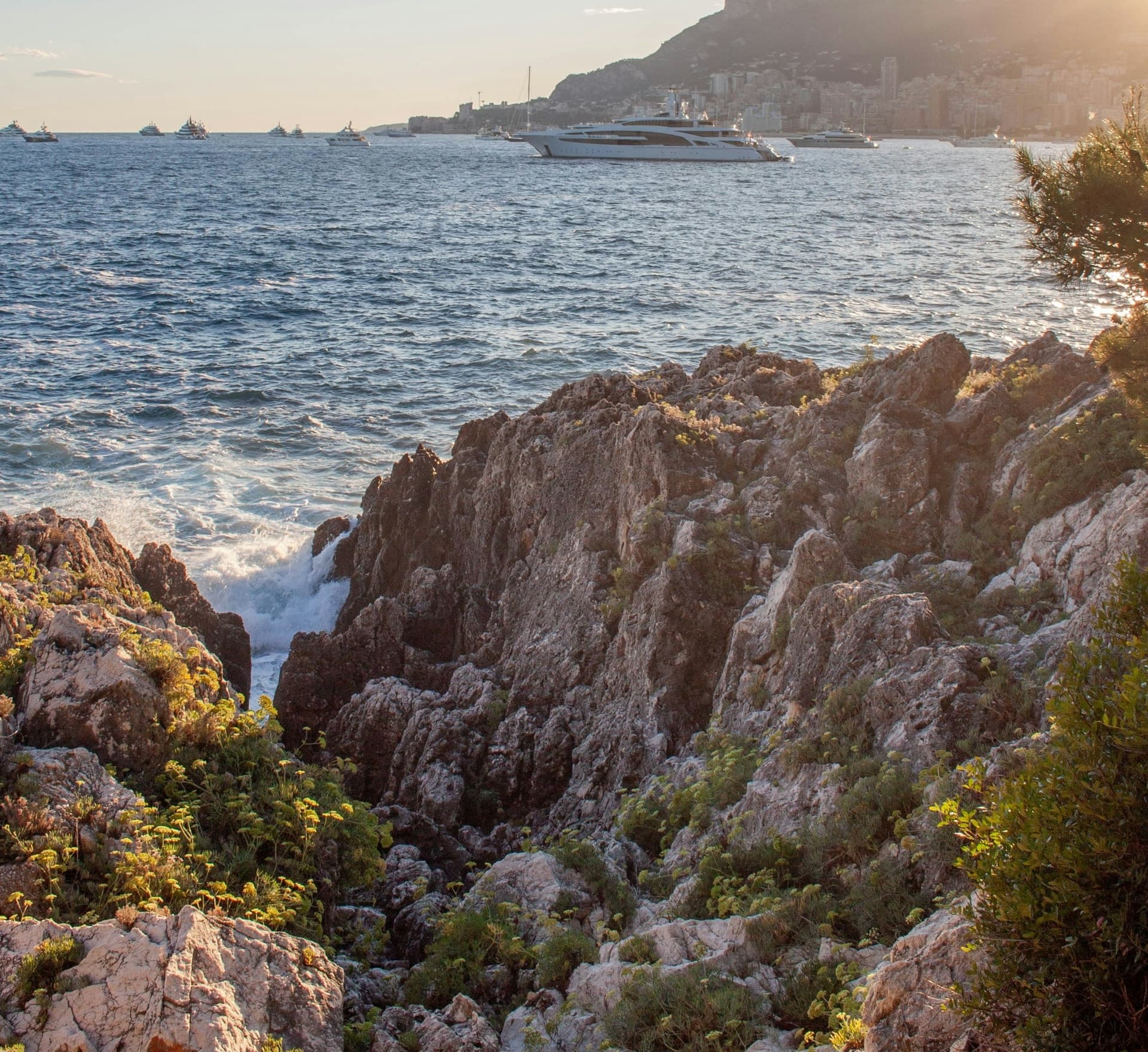
Other coasts keep a different register. Along stretches where the shoreline has been finished for display, the same hour can feel curated before it feels lived. The contrast is not moral so much as practical. A quay that still loads ice and nets at irregular hours will never look like the Riviera's closest coastal addresses, and that is precisely why it keeps its own clock. Glamour has another vocabulary. Here the vocabulary is slack lines, wet stone, and the decision not to hurry toward the lit frontage until the water has finished its sentence.
Stay long enough to watch the last working boat settle. Leave before the promenade crowd arrives with its lists. The interval between those two moments is short — often less than an hour — and it has a shape that repeats for anyone willing to rise or linger for it. Coffee from a thermos tastes of steam and cold air rather than of roast. Conversation stays low because the harbour does not require filling. You notice which windows stay dark on the slope and which ones mark households that treat winter as a season rather than an absence.
By full night the same quay will look simpler: fewer people, clearer reflections, a single lamp doing the work of depth. Morning will reverse the quiet. Engines, crates, the short shouts of people who share a schedule without needing to explain it. That cycle is the harbour's true hours. Visitors who arrive only at midday see the performance of a coastal town. Visitors who arrive at dusk, when the tide has already spoken and the calendar has not yet answered, see the room in which the town still works.
What remains afterward is not a photograph of boats in soft light, useful as that may be. It is the memory of granite still warm under the hand, of lines left slack because the water had finished moving for a while, and of an evening that belonged to the quay before it belonged to anyone's itinerary. The harbour keeps its own hours. The only skill required is the willingness to meet them where they are, rather than where a schedule would prefer them to be.
Key Highlights
Tide Before Calendar
The quay answers water and wind before it answers anyone's evening list.
A Quay Without Spectacle
Slack lines and wet stone do more for the hour than a promenade arranged for display.
Berths Held Quietly
The right slip faces away from the brightest frontage and keeps the walk short when dusk settles.