The Garage Before Dawn
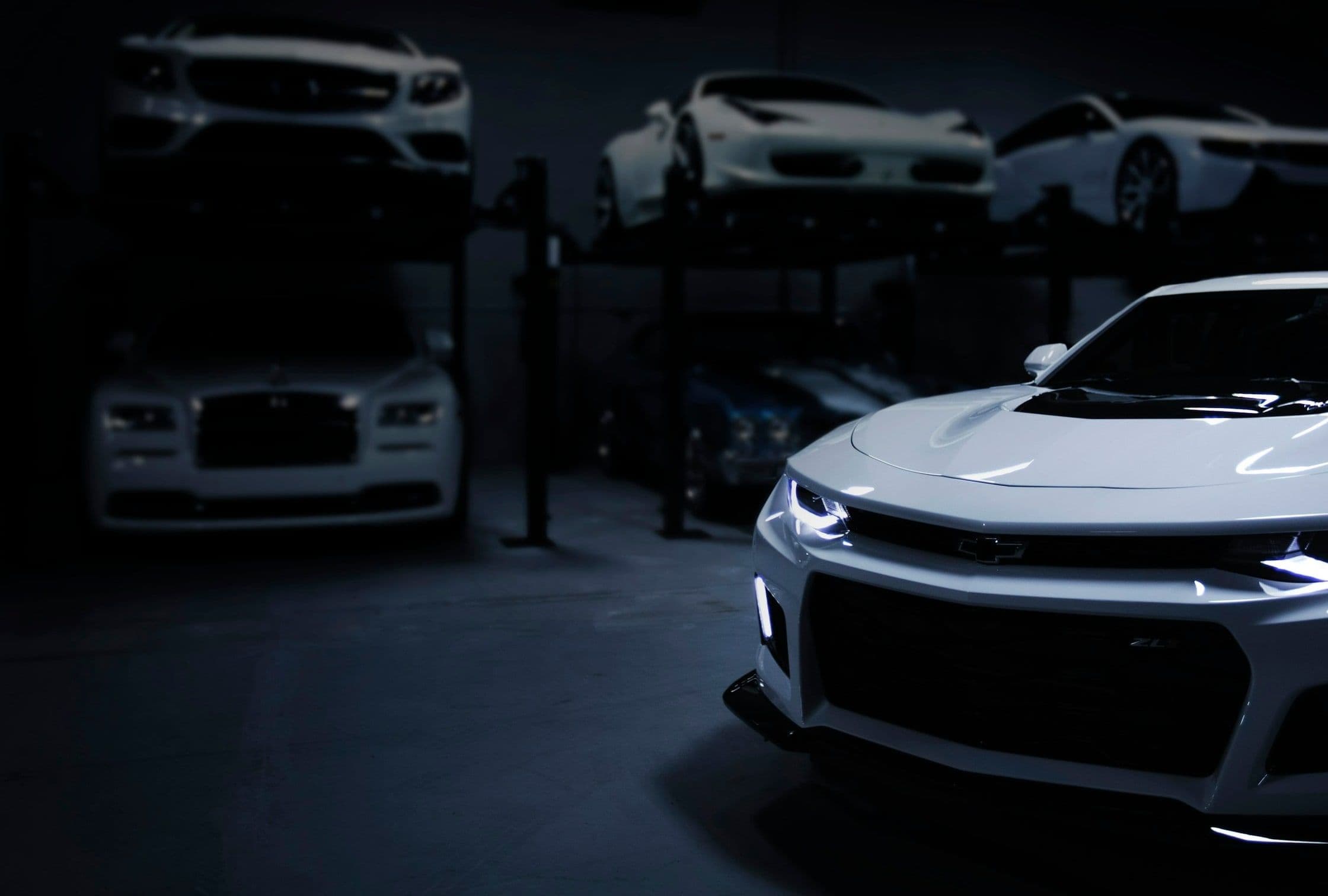
Before the road, there is only the garage. Paint still cold. A line of cars that have not yet been asked to prove what they were built for. The room holds them in a neutrality driving never allows: no wind noise, no heat cycling through tyres, no narrative of departure and return. They are objects again, briefly, and that is when certain truths are visible that speed would only blur.
Judgement here is quieter than a drive. The weight of a door, the way chrome holds a strip of light, the stance that was argued over in a drawing office and never softened. Collectors learn to walk the line slowly, not to admire but to verify. Does the silhouette hold when nothing is moving? Does the paint read depth without sun? Does each car respect the next without competing for the same reflection?
Dawn will come and one of them will leave. Until then, the room is a catalogue of intentions: speed held in reserve, finish treated as seriously as torque. Keys hang or sit in drawers; either way, the moment before choice is its own ritual. Some owners delay the first start of the week because the garage is where responsibility is lightest and appreciation is clearest.
Lighting in these spaces is rarely accidental. A single LED strip or a high window is enough to reveal panel alignment and to hide what flattery would distort. Too much light turns the room into a showroom; too little hides the work that justifies the collection. The best garages feel like studios where sculpture happens to be mobile.
Floor material matters more than decoration. Concrete that breathes, epoxy that does not glare, drains where meltwater from an early wash can disappear without drama. The garage is a workshop of arrival: tyres checked, pressures noted, a cloth left on a fender not because it is dirty but because care continues when speed is not available.
Spacing is etiquette. Cars need room for doors, for a person with a torch, for the quiet embarrassment of bumping a mirror against another mirror. Serious collections leave air between bodies so each car can be read alone. The line at dawn is not a traffic jam; it is a sequence of decisions waiting for a key, each machine visible as itself rather than as part of a crowd.
Sound before start-up is its own language: the tick of cooling metal, a faint relay, the soft settle of a chassis on cold springs. Owners who know their cars recognise irregularities in that silence. The garage before dawn is where those irregularities are heard without the masking roar of an engine.
There is also the social garage: staff who move cars so the owner never has to reverse into traffic blind, calendars of service that treat mileage as a schedule rather than a score. Even then, the hour before light is often private. It is when the collection belongs to one pair of eyes and no audience, and when a car can be walked around slowly without explaining why.
What distinguishes a warehouse from a garage is attention to the in-between. Charging cables routed so they do not trip, fire suppression that does not rust, ventilation that removes fumes without turning the space into a wind tunnel. These are not glamorous details; they are why a car returns from a drive into an environment that preserves finish and keeps cold metal from weeping onto paint overnight.
When the first car leaves, the room changes. Space opens, light shifts, the remaining machines look slightly more alone and slightly more ready. The garage before dawn is the last still frame before motion rewrites everything. Collectors who respect that frame tend to keep cars longer, because they understand rest as part of performance, not its opposite. The empty bay is not absence; it is the shape of return.
Key Highlights
Before the Road
The first reading is stance, paint, and the weight of a door, judged while nothing is moving.
Light on Chrome
A thin strip of light is enough to show what was finished carefully, without showroom flattery.
Speed in Reserve
The garage holds intention in silence until a key turns and the road is allowed to ask questions.