
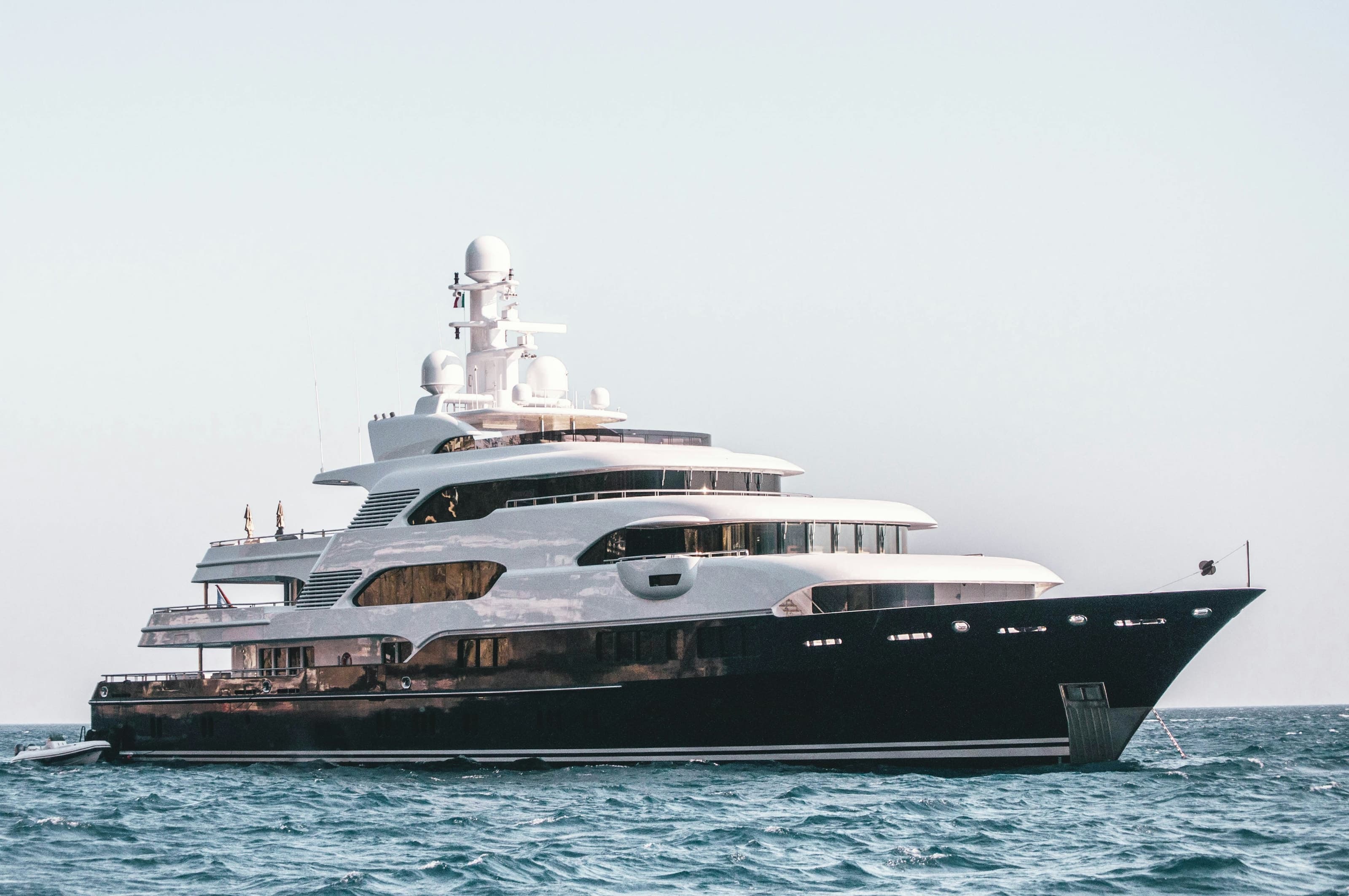
A staircase can tell you more about a yacht than a brochure length. On Heesen’s Project Setteesettanta—yard number YN 20857, a full-custom aluminium hull of about one hundred eighty-seven feet—the centre is not a beach club or a lounge that photographs well from the quay. It is an oval stair that rises roughly thirty-three feet through four decks toward a skylight, its blue metal tubes finished by an artist after glass proved too fragile for the sea. Wooden steps appear to float around that blue; a continuous handrail runs the other way. The piece looks effortless. Interior specialist Perry van Hirtum has said it was among the most demanding elements of the build, joining yard engineers, the interior desk, and an artist on a problem that had to be as strong and silent as it was beautiful.
The owners are returning Heesen clients and seasoned seafarers. Their brief was not a showroom pose but a life at anchor with family and friends for long stretches. In answer, the yard broke its own layout habit: the bridge sits on the fourth deck rather than above the main deck. That move frees an observation deck above guest accommodation and gives the owners the entire upper deck—a panoramic suite and a private terrace of roughly two thousand one hundred fifty square feet that can double as a touch-and-go helipad. One VIP cabin holds the main deck; two twins and two doubles sit below. Interior volume is about nine hundred twenty gross tons. Performance, as stated for the project, aims at eighteen knots at the top and a transatlantic range near three thousand nine hundred nautical miles at twelve. Keel laid in 2023, launched in July, the yacht is finishing outfitting for sea trials with delivery framed for December.
Frank Laupman and Omega Architects kept a streamlined silhouette: fast-displacement hull, near-vertical bow, a light mast, and flat Starlink panels instead of traditional domes so the top stays quiet. Cristiano Gatto shaped the interiors—he and Heesen have more than a dozen projects together. The owners selected every marble slab themselves. Living quarters carry more than forty materials drawn from over seventy-five samples and mock-ups. Light, natural and artificial, is treated as a sculptural tool; Gatto has said that coming from sculpture he considers light essential to defining form and bringing material to life. Parquet with Cadorin, loose furniture designed by Gatto and built by Italian artisans, cabinet doors with routed finish, handles, and bronze inlays—project manager Ronald van Rossum’s line is plain: every single element is bespoke.
That insistence on crafted interiors finds an unexpected echo in the air. Aeroméxico, working with London- and Atlanta-based studio NewTerritory, is redesigning its Boeing 787 cabins around contemporary Mexican architecture, craft, and hospitality rather than around efficiency alone. Premier One Suites Plus, developed with Recaro, treats the business-class space more like a private room than a conventional seat: a footwell that becomes a second seat, an oversized table that allows dining together. Matte surfaces, textured upholstery, stone and glass deepen the familiar blue. Dining pieces draw on Jalisco terracotta and Oaxacan clay; blue-tinted glass references traditional tequila bottles made from recycled glass. Embroidered brand tags are handmade by more than two hundred thirty Indigenous craftswomen from the Sanul Konn group across fourteen communities in the Chiapas Highlands. A new Premium Economy cabin, El Estudio, extends the same visual language. Unveiled at APEX FTE EXPO in Singapore in November 2026, installation across the Dreamliner fleet is scheduled between 2029 and 2031. Nadja Orwell of NewTerritory put the thesis cleanly: aviation has treated time as friction to minimise; their purpose is the opposite—to make time feel inhabited rather than endured.
Read together, the Heesen stair and the Aeroméxico cabin are not about novelty. They are about how private long-range interiors are being asked to hold craft, light, and company without shouting. On Setteesettanta the stair is a structural and social spine—four decks of quiet transfer under a skylight. In the Dreamliner the suite becomes a room that can host a meal rather than a corridor of solitary screens. Both reject the idea that movement must look temporary. Both keep material decisions close to the people who will live with them: owners choosing marble; craftswomen stitching tags; an artist finishing blue tubes that must survive salt and motion.
For a reader who already charters or owns, the useful questions are operational. How does the bridge relocation change the feel of the owner’s deck and the observation level above guests? Does the helipad terrace remain a private terrace most of the week, or does it become a logistics pad? Will the stair’s silence hold when the yacht is full? On the aircraft side, when do the suites actually enter the fleet, and does Premium Economy’s El Estudio keep the same material discipline once it scales? Selection here means noticing which interiors still treat craft as structure—not decoration pasted onto a hull or a cabin after the engineering is closed.
Heesen’s returning clients asked for a life at sea that could stretch. NewTerritory asked airline time to feel inhabited. Neither brief invents scarcity theatre. Both insist that the centre of a long passage—vertical on a yacht, horizontal in the air—should be as carefully made as the destination. That is the register Beyondaries keeps: stairs held in blue, rooms that let a table form at altitude, and materials chosen for the week you actually live rather than the photograph you leave behind.
Delivery windows matter. Setteesettanta’s December handover sits in the same calendar that fills Caribbean charter weeks and Alpine winter houses. The Dreamliner retrofit sits years out—2029 to 2031—so the cabin story is a signal of direction more than an immediate boarding card. Still, the direction is clear: private interiors of movement are being rewritten toward craft, light, and the possibility of company. A yacht that repositions its bridge to give owners a deck; an airline that lets two people dine across a suite table; a stair that refuses fragile glass in favour of metal finished by hand. These are not lifestyle captions. They are decisions about how a day at sea or a night aloft should feel when the audience is only the people who board.
When the last mock-up is cleared and the sea trials begin, Setteesettanta will be judged less by the drama of its blue tubes than by whether the house above them stays calm at anchor. When the first Premier One Suites Plus rows enter service, they will be judged by whether time in the air feels held. Between those two tests sits a shared editorial fact: the strongest UHNW interiors of movement are being designed as places, not as corridors.
That same care for private interiors of movement sits beside the quiet before a start in Collectors’ Garage Signal, and with harbours that keep their own hours in The Quiet Berth.
Key Highlights
Four Decks, One Spine
An oval stair rises ~33 feet under a skylight; blue metal tubes replace glass that could not take the sea.
Bridge Raised
Owners take the upper deck and a ~2,150 sq ft terrace; the bridge sits on the fourth deck.
Cabins as Rooms
Aeroméxico’s Premier One Suites Plus and El Estudio extend craft and company into the 787 fleet from 2029.
Explore more

Motor
Collectors’ Garage Signal: Desire Before the Spec Sheet
What serious collections telegraph before a catalogue opens — coachbuilt scarcity, dawn routines, and machines kept for the hand.

Motor
The Bay Left Open
A garage ritual that is not display: space kept for the machine that will leave before dawn.
Travel
The Quiet Berth
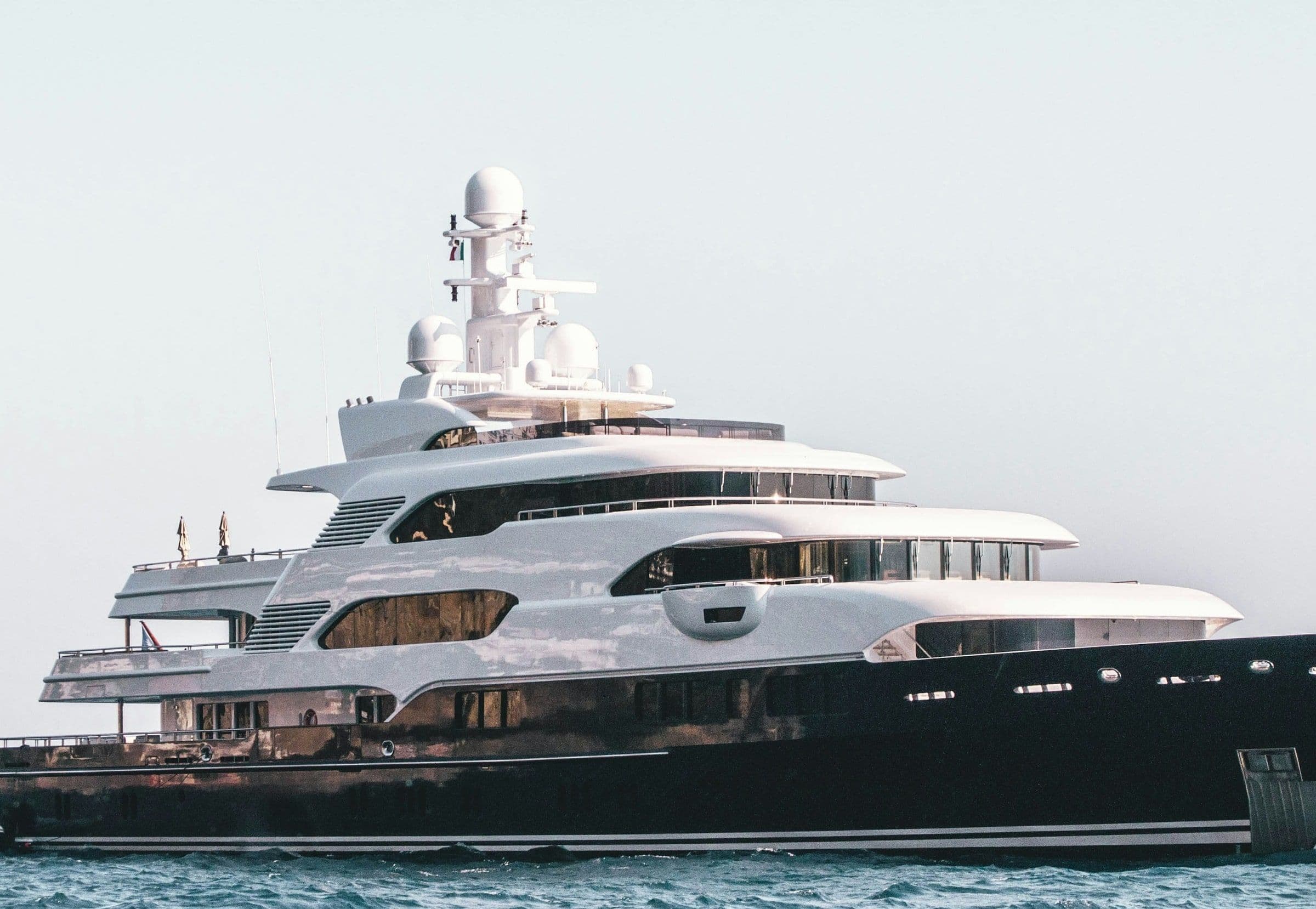
A berth that keeps its own hours — quay, tide, and harbour calm that does not need an audience.
Motor
Night Drive on the Wrist
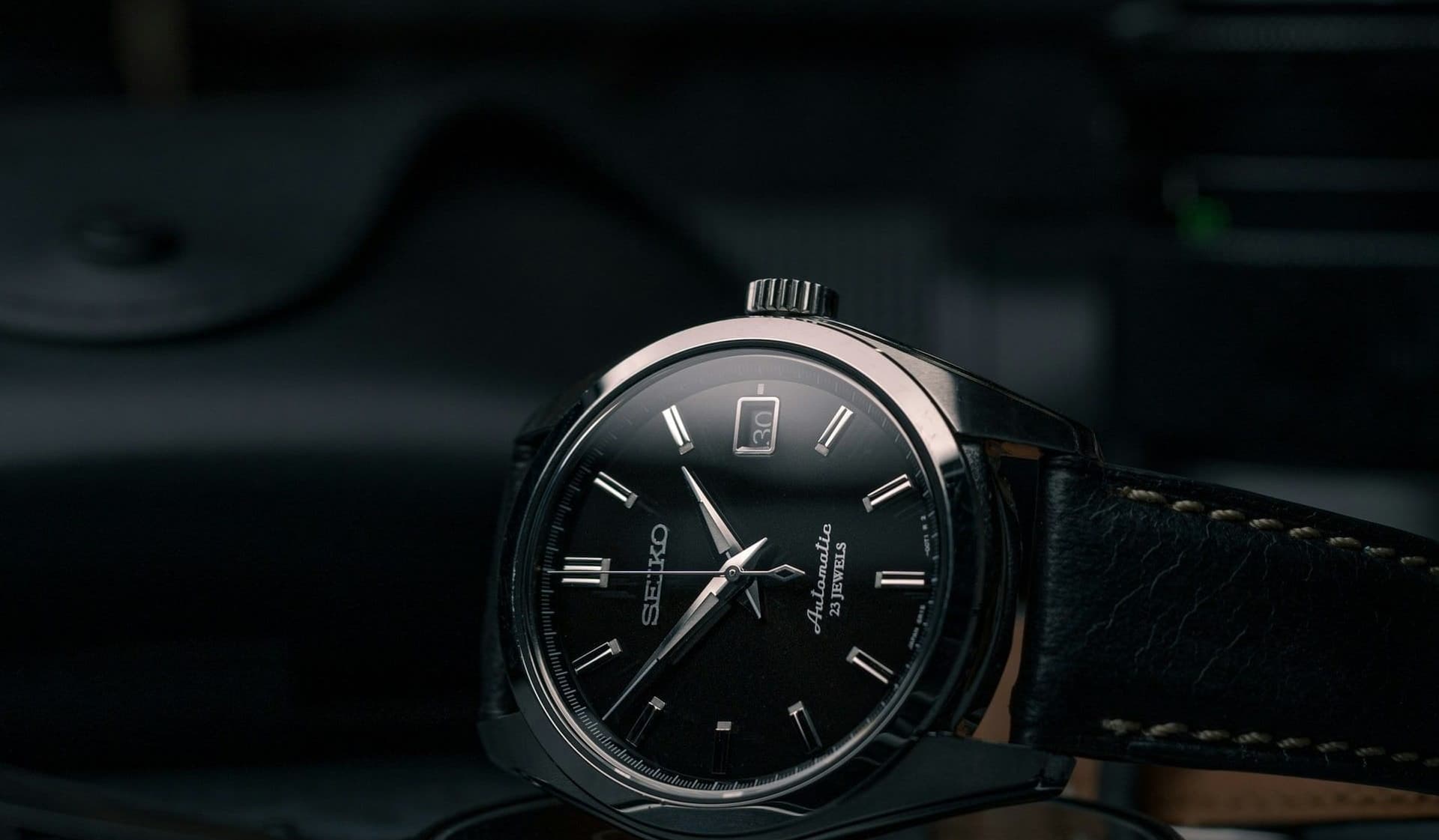
A dial that stays readable when the cabin is dark, and a road that asks for less light than the city.